
1951: Shipton’s photograph
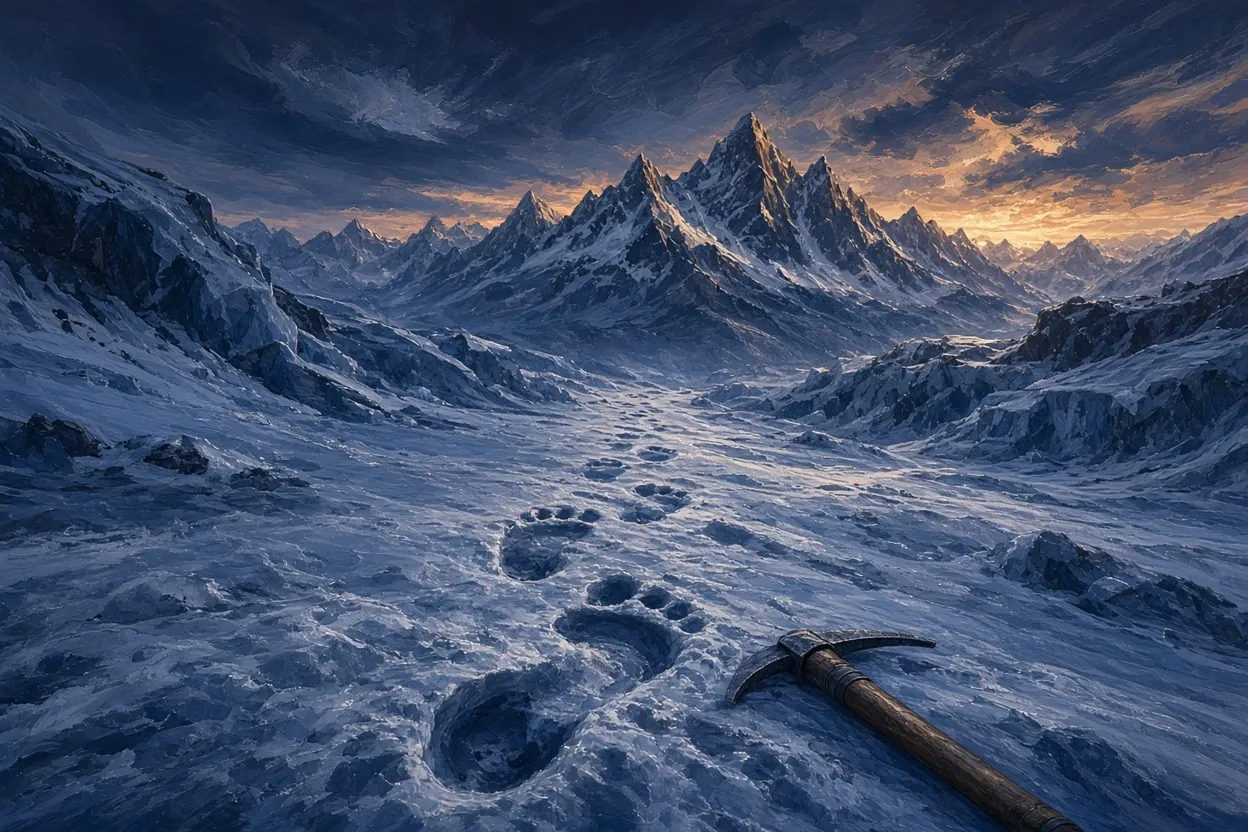
A black-and-white photograph with an ice axe beside it. This single picture turned the yeti into one of the world’s most famous mysteries.
What happened
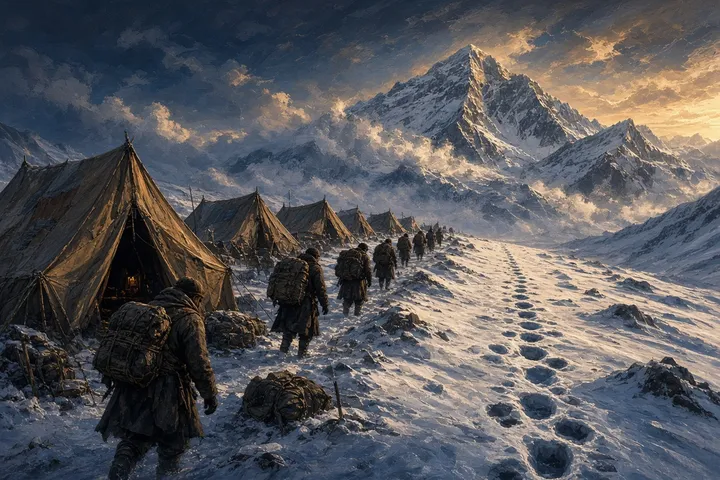
In 1951 a team led by the British mountaineer Eric Shipton was looking for a route up Everest from the Nepal side. Edmund Hillary, who would reach the summit two years later, was among them.
On 8 November, on the Menlung Glacier west of Everest on the Nepal–Tibet border, Shipton, the doctor Michael Ward and the Sherpa Sen Tensing came across a line of footprints in the snow. With nothing to measure them by, Shipton photographed the clearest print, once with an ice axe beside it and once with Ward’s boot.
The print was nearly twice as broad as a human foot, with a big toe set apart. When the photograph was published, it caused a sensation. Explanations have since included ordinary prints enlarged by melting in sun and wind, or the tracks of a barefoot person; Michael Ward himself later wrote about a natural explanation.
In Aowri
Shipton’s photograph does not appear in the novel. But in Aowri’s Himalaya, tracks and signs in the snow are what show the way, just as they did for these explorers.
And the question in Mukit’s mind is the same: so many accounts, so many prints, and still no solid proof. Why?
“For all this, no solid proof of the creature’s existence has ever been found.”