
1921: the ‘Abominable Snowman’
The first organised expedition to Everest came back with a story about footprints. And through one translation, the yeti got its most famous English name.
What happened
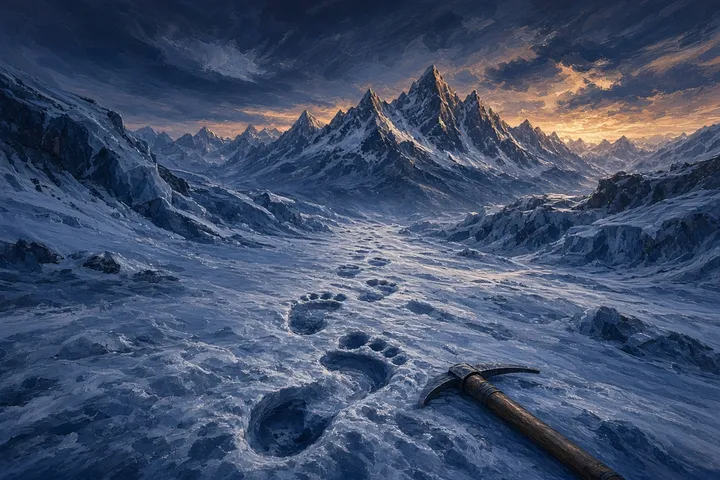
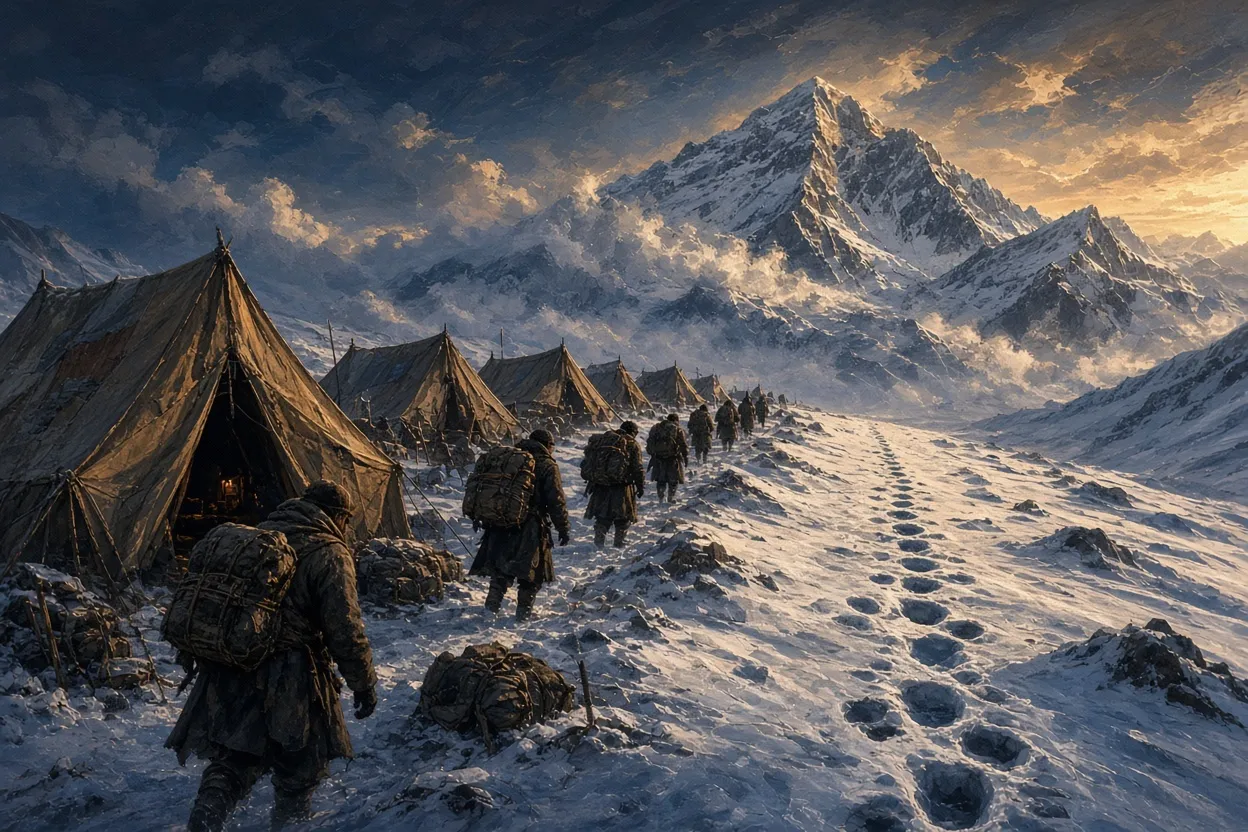
In 1921 a British team led by Lt-Col Charles Howard-Bury made the first reconnaissance of Everest; George Mallory was among them. Crossing the Lhakpa La, a pass at about 21,000 feet, they found a series of footprints in the snow.
Howard-Bury thought they were probably made by a large loping grey wolf, whose tracks in soft snow merge into something like a barefoot human print. But the Sherpas said at once that they were the tracks of the wild man of the snows, the ‘metoh-kangmi’.
When the porters returned to Darjeeling, Henry Newman of The Statesman in Calcutta interviewed them and rendered ‘metoh-kangmi’ as ‘Abominable Snowman’. He later admitted the whole story had seemed such a joyous creation that he sent it to a few newspapers. The name stuck.
In Aowri
The history Mukit recalls includes the 1921 Everest expedition under Colonel Howard-Bury, whose members saw huge, human-like footprints near a glacier at around 20,000 feet.
In Aowri, the road to Everest is not only the climbers’ road. On it, Mukit finds something no expedition ever wrote down.
“There, near the glacier, they noticed several huge prints that looked like human footprints.”