
1832: Hodgson’s ‘wild man’
Of everything the West has written about the yeti, one of the earliest pieces is a single-line footnote. It was printed in Calcutta.
What happened
Brian Houghton Hodgson was the British Resident at the court of Nepal and a naturalist who studied Himalayan wildlife. In 1832 he published a list of the mammals of Nepal in the Journal of the Asiatic Society of Bengal in Calcutta.
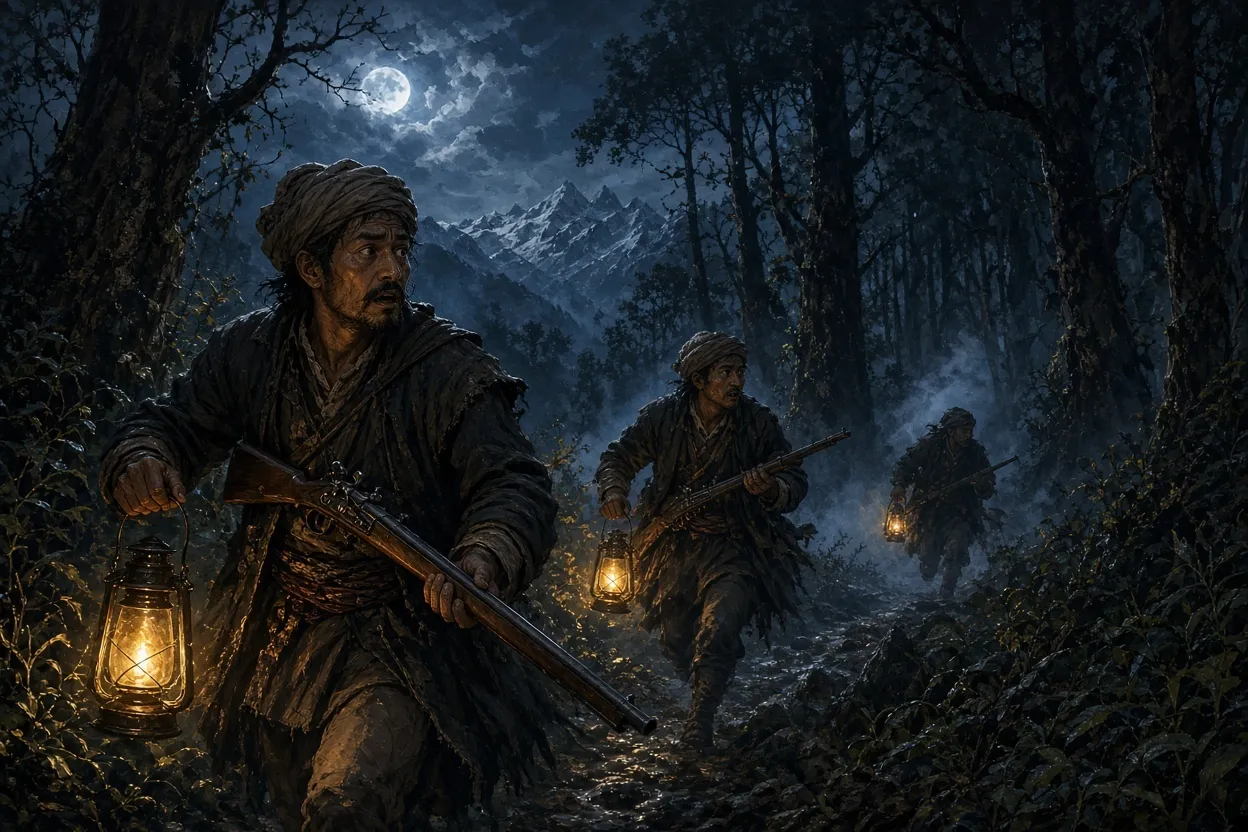
In a footnote to the section on monkeys, he noted that his hunters in northern Nepal had once been frightened by a ‘wild man’. Taking it for a demon, they fled instead of shooting. Hodgson guessed it might have been an orangutan, but doubted the accuracy of their account.
Hodgson never saw the creature himself, and Nepal’s authorities did not even allow him beyond the Kathmandu valley. Even so, this brief note is often cited as the first Western written source on the Himalayan ‘wild man’.
In Aowri
In Khumjung, when Dilbahadur mentions the yeti’s head kept in the monastery, Mukit recalls the old accounts he has read. In the novel this first one appears as the account of an explorer called ‘Hudson’, from around 1832.
His curiosity then carries him straight to the Khumjung monastery.
“Around 1832, the yeti first surfaced in the account of an explorer named Hudson.”